

Offering a plethora of advantages ranging from high energy efficiency and cost effectiveness to long life and design flexibility, LED lighting (Light emitting diodes) today has become mainstream. Be it our home, office or any other setting, LED lights are everywhere. While LED lighting is without doubt the greatest and most exciting advancement in the lighting arena, there is a “Dark” side to the “Bright” story.
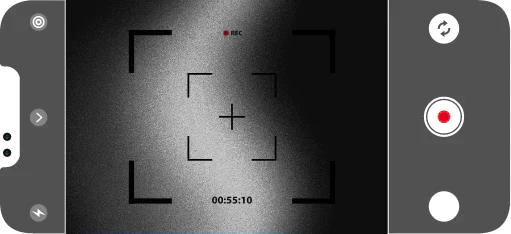
LED flicker is a rapid fluctuation in light output, usually caused by the LED driver. In India the mains-driven ripple is about 100 Hz, too fast to see but still linked in some people to headaches and eye strain. You can test a bulb by filming it in slow-motion on a phone.
What is LED flicker, and why can't I see it?
LED flicker is the cyclic rise and fall of light output, measured as percent flicker and flicker index. In India, mains power alternates at 50 Hz, and the rectifier inside an LED driver produces ripple at 100 Hz. The eye does not consciously notice this rate, but IEEE 1789-2015 describes health risks such as headaches and migraines from some modulation levels in sensitive people. Good driver design keeps the ripple low.
It’s the invisible flicker present in LED lights
Flicker is constant fluctuation of light output and it is of two types – Visible and Invisible. Visible flicker which is in the frequency range of 100 hertz can be seen by naked eye. However, any flicker above 100 hertz is termed as invisible flicker which human eye cannot detect, and it is the one that we all should be concerned about.
Here’s how to check invisible flicker
Open your smartphone camera in slow motion video mode.
Point towards the LED light source.
You will notice a visible distortion. This is the invisible flicker.
Understanding the impact of invisible flicker on human eyes and health
LED lights with high flicker rate can cause various health complications. Because of the flicker, human eyes are forced to rapidly adjust to changing light output, which stresses the eye muscles. Studies has revealed that prolonged exposure to flicker emitted by LED lights can lead to various health problems including eye strain, headaches, blurred vision, fatigue, apparent slowing or stopping of motion, reduced visual task performance and in some cases, neurological problems.
Why we should be concerned about this problem?
We have our eyes open for around 6,000 hours a year and most of this time we are exposed to artificial light, so simply imagine the impact LED on our eye and overall health over prolonged exposure. If you are an office goer, you might have experienced headaches, eye strain or dizziness, and the culprit could be the LED lights installed at your office. In certain industrial settings, LED flicker can lead to performance issues and even mishaps.
Flicker, strobing or a failing bulb: how to tell them apart
|
What you notice |
Likely cause |
What to do |
|
Light visibly blinks or pulses |
Failing bulb, loose holder, or dimmer incompatibility |
Replace the bulb, check the holder, use an LED-rated dimmer |
|
Light looks steady but you get headaches or tired eyes under it |
Invisible flicker from the driver |
Test with the phone method; switch to a low-flicker model |
|
Moving objects appear to jump in steps |
Stroboscopic effect from modulated light |
Choose lower-flicker lights, especially near machinery |
Children are most susceptible to these health hazards as they are exposed to LEDs in schools, homes, malls and everywhere else. Studying for long hours under LED lights with high flicker can cause eyesight problems in children. Same goes for teenagers who spend considerable amount of time reading and preparing for exams.
How to check if an LED bulb flickers?
You can check an LED bulb for flicker with a phone camera in slow-motion mode.
1. Switch the phone camera to slow-motion video.
2. Hold it about 30 cm from the lit bulb and record 5 seconds.
3. Play the video. Dark bands rolling across the bulb or visible pulsing suggest flicker.
4. Repeat with a bulb you trust, to compare.
This is an indication, not a measurement. Phone cameras can add banding of their own, and only a flicker meter in a lab gives a percentage.
What flicker level is acceptable?
IEEE 1789-2015 is a recommended practice, published by IEEE, that sets acceptable flicker as a function of frequency, so there is no single percentage that fits every light. One summary of the standard cites about 10% maximum at 120 Hz. [CONFIRM: value at 100 Hz from the standard itself, and whether any Indian standard sets a limit]. Replace the current line about "IEEE PAR 1789, California… 30%.
Why LED lights flicker more on dimmers?
Some LED lamps flicker at low settings, particularly on phase-cut dimmers designed for old incandescent bulbs. Use a dimmer rated for LED loads and a lamp that states it is dimmable.
Is there any safe limit for flicker?
While flicker is harmful for eye health as revealed by several studies, there is not much awareness on this subject in India, and there are no regulations on LED light flicker levels yet. However, IEEE standards PAR 1789, California has prescribed the threshold limit of 30%. This is important to note that LED products from different brands available in India have flicker percentage varying between 40 to 80 percent, which is much higher than the safe limit of 30%.
How to choose a low-flicker LED?
- • Look for a stated percent flicker or flicker index on the datasheet.
- • Prefer a branded driver with a constant, smooth current output.
- • For study and work areas use a model built for it, such as EyeLuv
So, is there a solution to this problem?
Yes, there is. While flicker cannot be brought to zero level, but it can certainly be reduced without impacting the performance of the LED light. The key to mitigating flicker lies in the LED driver which can eliminate the problem by supplying the constant non-oscillating current to the LED.
Presenting Orient EyeLuv LEDs with Flicker Control Technology
As a trusted and responsible brand, Orient Electric has addressed the issue by launching “EyeLuv series LED Lights” with Flicker Control Technology which reduces the invisible but harmful flicker present in LED lights.
Orient’s EyeLuv range of LEDs features lamps, battens, downlighters and recess panels, designed to provide superior lighting with efficiency, comfort and safety.
Studies to support the health benefits of Orient EyeLuv LED lights
A research was carried out in an NABL accredited Lab to check performance of Orient EyeLuv LEDs as compared to LED lights of other well-known Indian brands. The study, which was conducted on respondents under different scenarios for multiple days, revealed that compared to other brands, Orient EyeLuv exposure resulted in 64% lesser number of headaches, 55% lesser eye strain and 71% lesser cases of fatigue. Also, productivity level under Orient EyeLuv was 26.25% better than others. Amongst all LEDs, Orient EyeLuv has the lowest flicker percentage of below 8% while flicker percentage in other LEDs ranged between 40% to 80%.
A testament to the same is that the Orient EyeLuv LEDs range with Flicker Control Technology has also been awarded a certificate of recommendation Indian Medical Academy for Preventive Health.
So, don’t strain your eyes anymore. Switch to Orient EyeLuv LED lights that care for your eyes. #FlickerNahiTohAankheinSahi.
FAQs
Q: What is LED flicker?
A; LED flicker is a rapid, repeating variation in an LED's brightness, usually caused by the driver that powers it. It can be visible, like a blinking bulb, or too fast for the eye to see. The invisible kind is the one linked to eye strain and headaches in sensitive people.
Q: How do I check if my LED bulb flickers?
A; Film the bulb in slow-motion on your phone from about 30 cm. Dark bands moving across the bulb, or pulsing brightness, point to flicker. Compare with a bulb you trust, because phone cameras can add banding. For a precise percentage you need a flicker meter.
Q: Can LED flicker cause headaches or eye strain?
A; For some people, yes. IEEE 1789-2015 describes headaches and migraines as possible effects of certain flicker levels, and sensitivity varies from person to person. If you get frequent headaches under artificial light, see an eye doctor.
Q: What flicker percentage is safe for LED lights?
A; There is no single safe percentage, because the acceptable level depends on flicker frequency. IEEE 1789-2015 gives frequency-based limits, and one summary quotes about 10% at 120 Hz. Lower is generally better.
Q: Do dimmers make LED lights flicker?
A; Sometimes. LED lamps on phase-cut dimmers can flicker at low settings even when they are steady at full brightness. Use a dimmer rated for LEDs, and a lamp marked dimmable, to avoid it.
Q: Are Orient EyeLuv lights flicker-free?
A; No light is perfectly flicker-free, but EyeLuv lamps use flicker-control technology to keep it low. Orient states a flicker level below 8% in its testing.